Return to the previous menu.
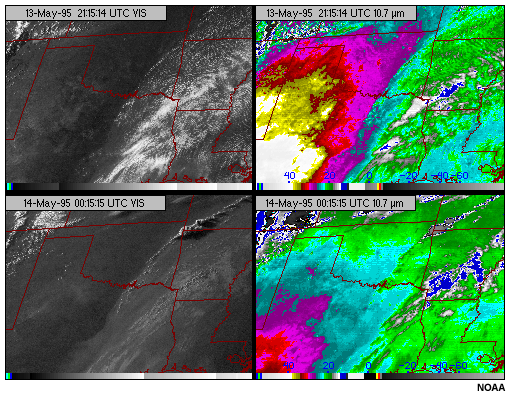
Since haze scatters sunlight away, moist hazy regions do not warm as rapidly during daytime as dry regions. This phenomenon allows identification of features such as the dry line using 10.7 micron and visible channel imagery together.
As the top two panels show, early in the day, haze is not readily detected due to scattering in the visible image; however, its effect is apparent in the temperature field in the 10.7 micron channel image.
In the bottom panels, later in the day, haze is apparent in the visible image because the scattering geometry is favorable. But the temperature field no longer indicates the contrast across the dry line, as surface temperatures in the dry air have fallen rapidly.
Next | Previous | Main Menu | Page: 1 | 2 | 3 | 4 | 5 | 6 | 7 | 8 | 9 | 10