Return to the previous menu.
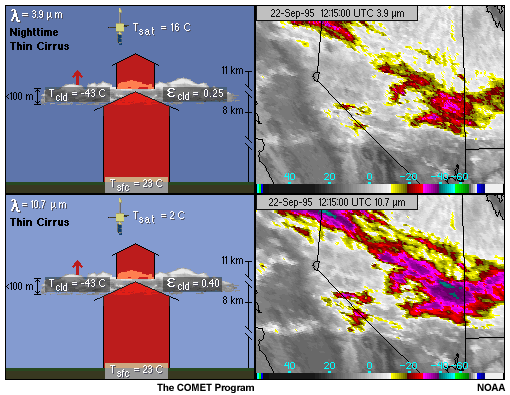
This set of models depicts the interactions of radiation with thin cirrus clouds at night. At both wavelengths, the cloud transmits earth-emitted radiation as well as its own radiation.
Because thin cirrus is patchy and of variable thickness, the energy transmitted through the cloud from below may be thought of in terms of subpixel or partly filled fields of view with cold and warm areas.
Thus, the satellite observed brightness temperature of thin cirrus in the 3.9 micron channel is warmer than in the 10.7 micron channel. A brightness temperature difference of 3 degrees or more normally indicates thin cirrus or lower broken clouds.
The case studies will show that animation and the use of the 6.7 micron channel are important tools in helping identify thin cirrus.
Next | Previous | Main Menu | Page: 1 | 2 | 3 | 4 | 5 | 6 | 7