Return to the previous menu.
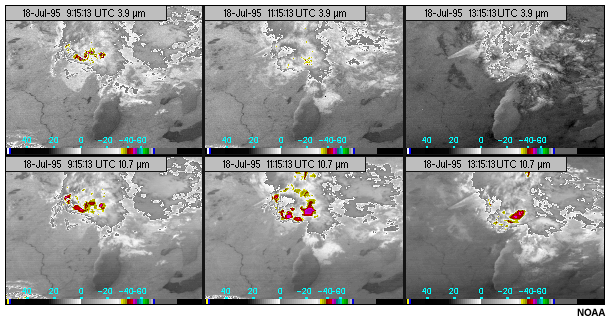
The left panels show the 3.9 and 10.7 micron channel images at night over the same area. Notice the similarity in brightness temperatures of the two images, while the 3.9 micron channel exhibits more noise in clouds where the scene is cold. The middle panels show the same area around sunrise. The 3.9 micron channel scene on the top appears warmer because both solar-reflected and earth-emitted radiation are being detected. The final two panels show the same area in daylight. Brightness temperature differences between the two images are very apparent. The 3.9 micron channel shows warmer surface and cloud temperatures because of the added radiance contribution from reflected solar energy. Since the 10.7 micron channel only detects earth-emitted radiation, its brightness temperature gives more accurate surface or cloud top temperatures.
Next | Previous | Main Menu | Page: 1 | 2 | 3 | 4 | 5 | 6 | 7 | 8