Return to the previous menu.
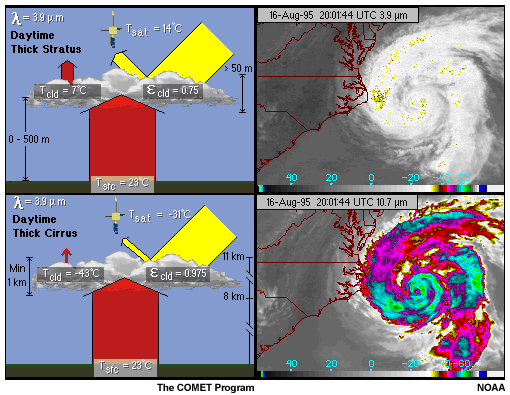
As shown by the model in the upper left panel, with the addition of reflected solar radiation, water clouds and the surrounding surfaces appear warmer at 3.9 microns than at 10.7 microns during daytime.
The model in the lower left panel shows a daytime thick cirrus cloud at 3.9 microns.
Notice that the amount of reflected solar energy is much smaller for the ice cloud than for the water cloud.
The 3.9 micron channel image in the upper right and the 10.7 micron channel in the lower right both use the same temperature color enhancement.
Because of reflection, the 3.9 micron image appears warmer than the 10.7 micron image.
Next | Previous | Main Menu | Page: 1 | 2 | 3 | 4 | 5 | 6 | 7 | 8