Return to the previous menu.
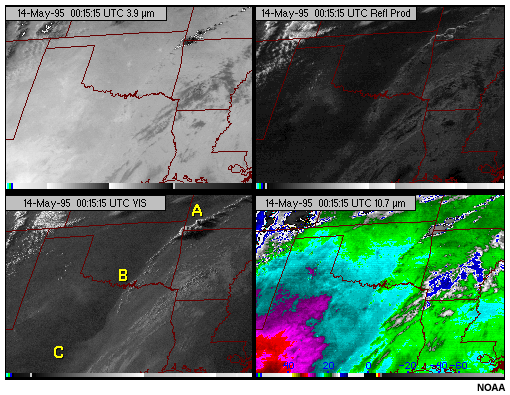
Given the proper positions of sun and satellite, forward scattering allows haze and dust to be detected using both visible and 3.9 micron channel imagery.
Notice the difference in brightness to the east and west of line A-B-C in the visible, 3.9 micron, and reflected product images.
Surface observations show that the area east of the line is more moist and has poorer visibility due to haze.
This image is centered near 36 degrees N and 100 degrees W. The satellite is located over 75 degrees W and the sun is near the date line.
This geometry provides favorable forward scattering into the satellite optics from the haze region. Thus, this area of the image has a brighter appearance.
In the relatively clean and dry boundary layer to the west, the images appear darker.
Next | Previous | Main Menu | Page: 1 | 2 | 3 | 4 | 5 | 6 | 7 | 8